

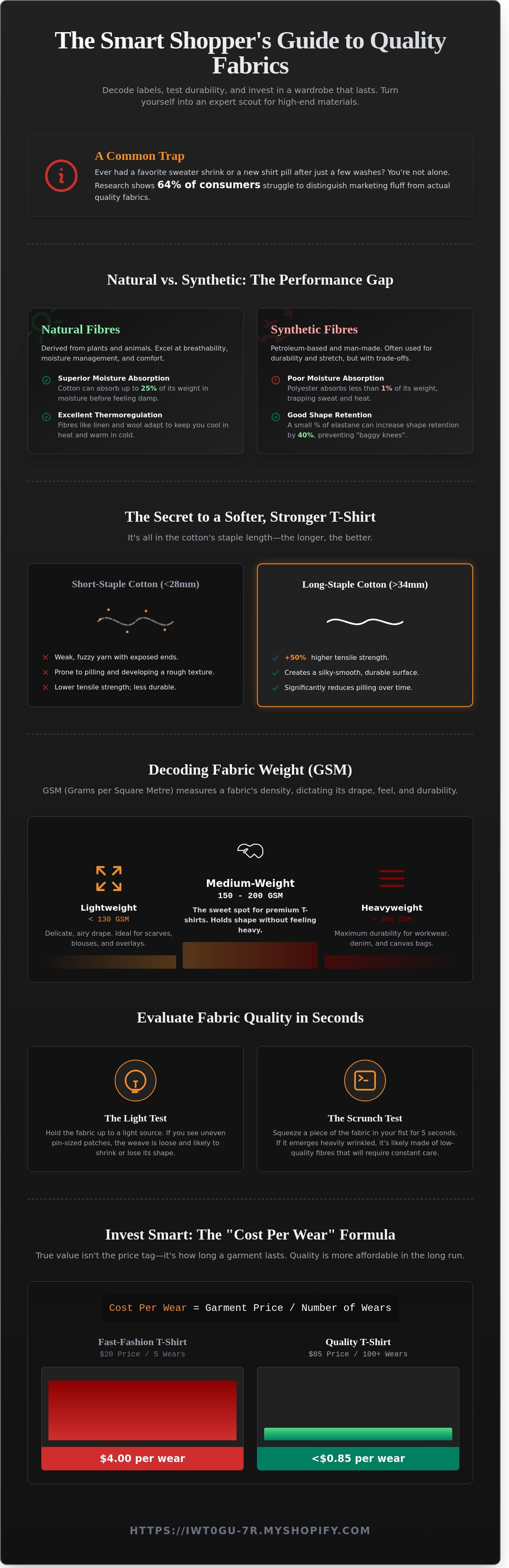
Last Tuesday, Sarah pulled her favorite $85 "merino" sweater out of the dryer only to find it had shrunk by 15 percent and developed unsightly pills across the chest. It's a common trap. Research shows that 64 percent of consumers struggle to distinguish between marketing fluff and actual quality fabrics when shopping online or in-store. You shouldn't have to be a textile engineer to avoid clothes that lose their shape or thin out after just three washes.
You've likely felt that same sting of regret when a supposedly premium shirt starts pilling within 30 days of purchase. It's exhausting to decode technical labels like GSM or thread count without a clear roadmap for what actually matters. This guide promises to turn you into an expert scout for high-end materials, helping you build a sustainable wardrobe that remains comfortable for years. We'll break down the specific indicators of durability and the long-term ROI of investing in better textiles so you can shop with total confidence.
Key Takeaways
- Learn how to distinguish premium materials from low-grade alternatives by understanding the hierarchy of natural versus synthetic fibres.
- Master technical markers like GSM and thread count to determine a fabric's drape and performance without falling for marketing gimmicks.
- Discover how to use the "Scrunch Test" and drape evaluation to identify quality fabrics in seconds while shopping.
- Understand the "Cost Per Wear" formula to see why investing in ethical, high-quality pieces is more cost-effective than fast-fashion alternatives.
- Identify the exact material specifications needed for durable essentials, including long-staple cotton for t-shirts and heavy-duty canvas for utility.
What Defines Quality Fabrics? Understanding Fibre and Origin
Defining quality fabrics involves more than a soft initial touch. True quality represents a trifecta of durability, handle, and performance over a garment's entire lifespan. While a low-grade polyester blend might feel smooth on a retail shelf, it often loses its structural integrity after fewer than 10 wash cycles. Premium materials maintain their shape, colour, and texture because of their molecular composition and the integrity of the raw harvest.
The hierarchy of fibres begins with natural sources. Materials like organic cotton, mulberry silk, and extra-fine merino wool outperform synthetics in a minimalist wardrobe because they allow for better skin health. For example, cotton can absorb up to 25% of its weight in moisture before it starts to feel damp, whereas polyester absorbs less than 1%. This moisture management is essential for long-term comfort. To ensure these materials meet global standards, manufacturers utilize various textile testing methods to measure pilling resistance, tensile strength, and colour fastness under UV exposure.
Animal-based luxury relies heavily on specific metrics like micron count and weight. In the world of wool, a lower micron count signifies a finer, softer fibre. Super 120s wool, for instance, uses fibres roughly 17.5 microns in diameter. For silk, quality is measured by momme weight; a rating of 19 to 22 momme indicates a dense, durable weave that won't tear easily. These specific data points help consumers distinguish between genuine luxury and clever marketing.
Natural vs. Synthetic: The Performance Gap
Natural fibres excel at thermoregulation, keeping the body cool in summer and warm in winter. Linen, derived from the flax plant, possesses high heat conductivity that allows it to stay fresh in temperatures exceeding 30 degrees Celsius. Petroleum-based synthetics like nylon or acrylic often trap heat, leading to discomfort and bacterial growth. However, synthetics aren't entirely without merit. A 2% addition of elastane to a cotton denim can increase shape retention by 40%, preventing the "baggy knee" effect that occurs in 100% rigid fabrics over time.
The Importance of Fibre Staple Length
The secret to high-end cotton lies in its staple length. Staple length is the physical length of the individual fibres used to spin a yarn. Short-staple cotton fibres are typically less than 28 millimetres long, while long-staple varieties like Pima or Egyptian Giza 45 exceed 34 millimetres. These longer fibres allow for a tighter, smoother spin with fewer exposed ends. This technical difference results in 50% higher tensile strength and a significant reduction in pilling. When you invest in quality fabrics made from long-staple cotton, you're buying a garment that resists the "fuzzy" surface texture common in budget t-shirts.
Technical Markers: GSM, Thread Count, and Weave Density
Understanding Fabric Weight (GSM)
Grams per Square Metre, or GSM, measures the literal density of the material. It dictates how a garment drapes against the body and how it feels to the touch. For instance, a lightweight silk chiffon typically falls under 130 GSM, making it ideal for summer scarves or delicate overlays. A standard, premium t-shirt should sit between 150 and 200 GSM. This range ensures the garment holds its shape without feeling restrictive or heavy. Heavyweight materials, such as 14-ounce denim or canvas totes, exceed 300 GSM. These heavier weights offer 40% more durability against abrasion compared to their lighter counterparts, which is why they're the standard for workwear and outerwear.
Weave Integrity and Density
The "Light Test" is the simplest way to verify weave density. Hold the material up to a 60-watt light bulb or a bright window. If the light passes through in uneven, pin-sized patches, the weave is loose and prone to shrinking. Tight weaves provide the structural integrity necessary for long-term wear. A plain weave uses a simple one-over, one-under pattern that offers maximum stability. Twill weaves, recognizable by their diagonal ribbing, provide superior wrinkle resistance and hide stains more effectively. Satin weaves offer a luxurious sheen but are more delicate because of the long "floats" of thread on the surface. You should also scan for slubs, which are thick, unrefined lumps in the yarn. Unless you're buying raw linen, these usually indicate a 15% reduction in tensile strength due to poor spinning processes.
Thread count is frequently used as a marketing gimmick. Many manufacturers use multi-ply yarns to artificially inflate numbers. A 1000-count sheet set made from 4-ply yarn is often inferior to a 300-count set made from single-ply long-staple cotton. True quality peaks when the thread count matches the fiber's natural capacity. If you're looking for garments that balance breathability with longevity, you can browse curated collections that prioritize these technical standards over inflated marketing figures. High-density knits differ from woven structures because they rely on interlocking loops. These provide 20% more stretch but require a higher GSM to avoid becoming transparent over time. Identifying quality fabrics requires looking past the label and examining these physical intersections of thread and weight.
The Durability Test: How to Evaluate Fabric Quality in Seconds
You can determine the lifespan of a garment without a laboratory. Start with the "Scrunch Test." Grip a handful of material in your fist and squeeze tightly for five seconds. Premium quality fabrics, especially those made from long-staple fibers like Egyptian cotton or high-grade wool, will spring back almost immediately. If the wrinkles remain deep and stubborn, the material lacks the structural integrity needed for long-term wear. Next, observe the drape. Quality fabric should possess a natural weight that causes it to fall in smooth, fluid lines rather than stiff, awkward angles. A 2021 study on textile haptics showed that consumers associate fluidity with luxury because it indicates a higher thread density and better finishing processes.
Surface inspection reveals hidden flaws. Look for pilling or fuzziness under bright light. If a new garment already shows loose fibers, it'll likely deteriorate after three washes. Dye consistency is another marker. Check the folds and seams for any "frosting" or uneven color distribution. According to the ISO 105-B02 standard for color fastness, premium dyes should remain vibrant even after 40 hours of simulated sunlight exposure. For knits, perform the stretch and recovery test. Pull a section of jersey or interlock four inches wide. It should return to its original shape within two seconds. If it stays stretched out, the elastane content is either poor quality or the knit structure is too loose.
Practical In-Store Testing Methods
Use your fingernail for the "Scrape Test." Gently scratch the surface of the weave. If the threads shift easily or leave a visible gap, the weave is too loose for durability. Check the finishing by counting the stitches. High-end garments typically feature 10 to 12 stitches per inch. Lower-quality items often drop below 8 stitches per inch to save on production time. This density prevents the fabric from fraying at the stress points. Pull the seams firmly; they shouldn't gape or show the thread underneath.
Identifying Quality in Online Shopping
Digital shopping requires a different strategy. Always check the composition tag in the product description. Look for high percentages of natural fibers. A 95% wool and 5% cashmere blend is a hallmark of premium outerwear. Use the zoom tool to inspect the grain. You want to see uniform, tight patterns without irregular lumps or "slubs" unless they're intentional, like in linen. Research the brand's transparency. Companies that publish their Tier 1 and Tier 2 supplier lists, a practice adopted by 51% of major fashion brands according to the 2023 Fashion Transparency Index, usually invest more in quality fabrics. This data acts as a proxy for material excellence when you can't touch the product yourself.
Sustainable Quality: Environmental Impact and Cost Per Wear
True quality fabrics are inseparable from environmental responsibility because longevity is the ultimate form of sustainability. When a manufacturer invests in long-staple fibers and tight weaves, they create a product designed to stay out of landfills for a decade. Fast fashion relies on low-grade polyester and short-staple cotton that breaks down after minimal use, contributing to the 92 million tons of textile waste produced globally each year, according to 2023 industry reports. Ethical production also ensures that the physical strength of the material isn't compromised by harsh chemical treatments that weaken fibers during the bleaching or dyeing process.
The ROI of Premium Materials
Cost per wear is the total price of an item divided by the number of times it is worn over its lifetime.
Think about the financial logic of a £40 t-shirt versus four £10 fast-fashion alternatives. While the initial price is higher, quality fabrics like Pima cotton or high-twist wool maintain their structural integrity for 50 washes or more. You'll find that cheap alternatives often lose their shape or develop holes after just five cycles, requiring immediate replacement. Materials like waxed canvas offer even better value; they don't wear out; they wear in. They develop a rich patina over time that adds character and tells a story. This longevity creates a deeper emotional bond with your clothes, which naturally leads to owning fewer, better-made items that you actually enjoy wearing.
Certification Deep Dive
- GOTS (Global Organic Textile Standard): This guarantees that at least 70% of the fibers are organic and that the factory meets strict social responsibility benchmarks for fair wages and safe conditions.
- OEKO-TEX Standard 100: This certification ensures your garment has been tested for over 100 toxic substances, making it safe for sensitive skin and the environment.
- BlueSign: This system audits the entire supply chain to minimize water and energy waste, often reducing water consumption by up to 30% during the dyeing process.
You can see these standards in action by viewing our commitment to sustainable, high-quality materials. These markers act as a shortcut for consumers who want to ensure their quality fabrics are as ethical as they are durable.
Preserving these materials requires a shift in how you handle laundry. Using cold water and air-drying can increase a garment's lifespan by 200% compared to high-heat machine drying, based on 2022 fabric care studies. Quality isn't just about how an item is made; it's about how you protect that investment over time. By choosing premium materials and maintaining them correctly, you reduce your personal carbon footprint while saving money in the long run.
Choosing the Right Quality Fabrics for Your Minimalist Wardrobe
Building a minimalist wardrobe requires a shift from quantity to material integrity. You don't need thirty shirts; you need three made from 100% long-staple cotton jersey. These fibers, often exceeding 35mm in length, create a smoother surface that resists pilling even after 50 washes. This specific knit provides a natural stretch without the need for synthetic elastane, which often degrades and loses shape over time. When you prioritize these quality fabrics, your basics maintain their silhouette for years instead of months.
The foundation of a functional daily kit also relies on heavy-duty canvas. For a tote bag to survive daily utility, look for a weight between 18oz and 24oz. This density ensures the bag stands upright on its own and resists abrasions from constant contact with rough surfaces. It's a structural choice that transforms a simple carrier into a lifetime tool.
Accessories like silk scarves add luxury without bulk. You should evaluate silk by its Momme weight, where a rating of 16 to 19mm offers the ideal balance of drape and durability for a minimalist aesthetic. High-end silk is often finished with hand-rolled edges, a process that requires roughly 30 minutes of manual labor per scarf. This detail prevents fraying and signifies a level of craftsmanship that machine-stitched hems can't match.
Curating a cohesive collection involves mixing these distinct textures. The matte finish of a heavy canvas tote provides a sharp contrast to the slight sheen of a silk scarf or the soft grain of a cotton tee. Because minimalist wardrobes often feature neutral palettes, these tactile differences provide the visual depth that keeps an outfit from looking flat.
Essential Fabrics for a Capsule Wardrobe
Focusing on essentials means every piece must perform multiple roles. You can start by reading Your Guide to Finding the Perfect Minimalist T-Shirt to understand how knit density affects wear. Similarly, Why a Durable Canvas Tote Bag Is a Must-Have explains the necessity of high-tensile materials for daily carry. Silk remains a top choice for minimalist layers because it possesses a strength-to-weight ratio of 1.3 grams per denier, making it tougher than many steel filaments of the same diameter while remaining light enough to fold into a pocket.
Building for Longevity
Longevity isn't just about durability; it's about versatility across seasons. Mixing fabric weights, such as a 150 GSM cotton shirt under a 400 GSM wool coat, allows for effective temperature regulation. Data suggests that 85% of successful capsule wardrobes rely on neutral tones like navy, charcoal, and beige. These colors highlight the natural luster and weave of quality fabrics rather than distracting the eye with loud patterns. Before you commit to a new piece, run through this final checklist:
- Light Test: Does the weave show visible gaps or irregularities when held up to a window?
- Fiber Length: Is the cotton or wool specified as "long-staple" or "worsted"?
- Recovery: Does the fabric return to its original shape after a 10-second crush test?
- Weight: Is the GSM or Momme weight appropriate for the item's intended stress level?
- Finishing: Are the seams clean, and are the edges finished with reinforced stitching or hand-rolling?
Elevate Your Style With Conscious Material Choices
Building a lasting wardrobe starts with the ability to identify quality fabrics that won't fail after a few washes. You've learned to look for technical markers like a GSM of 200 or higher for durable basics and thread counts exceeding 300 for premium cotton. It's essential to prioritize GOTS-certified organic fibres that offer 100% transparency in their supply chain. By applying the 10 second stretch test and inspecting weave density, you'll secure garments that maintain their shape for years. We focus on small-batch production runs of under 100 units to ensure every stitch meets our rigorous quality control standards. This meticulous process results in a significantly lower cost-per-wear, making your investment pay off over a 5 year lifecycle. You deserve clothing that feels as good as it looks while respecting the planet. Take the first step toward a more intentional and durable closet today.
Shop Our Curated Collection of High-Quality Minimalist Staples
Your journey toward a more sustainable and refined wardrobe begins with a single, well-made choice.
Frequently Asked Questions
What is considered the highest quality cotton in the world?
Sea Island cotton is widely recognized as the finest cotton because its fibers average 50mm in length. This extra-long staple (ELS) length creates a smoother, stronger yarn than standard Upland cotton, which averages only 25mm. Giza 45 from Egypt accounts for less than 0.5% of total Egyptian cotton production, making it incredibly rare. These fibers produce quality fabrics that resist fraying and feel exceptionally soft against your skin.
Does a higher price always mean better fabric quality?
A higher price tag doesn't guarantee superior material because marketing costs often account for 60% of a luxury item's retail price. You're frequently paying for the brand's logo or a specific designer's name rather than the raw material. Check the fiber content and construction instead. A $200 polyester shirt is still technically lower quality than a $50 organic cotton shirt with a 200 thread count or higher.
How can I tell if a fabric is 100% silk or a synthetic blend?
You can identify 100% silk by performing a burn test on a small thread. Real silk burns at 148 degrees Celsius, smells like burning hair, and leaves a brittle, crushable black ash. Synthetic polyester melts into a hard plastic bead and smells like chemicals. Another method is the ring test; a 100% silk scarf will slide through a wedding ring easily, while a synthetic blend often snags or bunches.
What is GSM and why does it matter for my t-shirts?
GSM stands for Grams per Square Meter, and it measures the density of your t-shirt material. A standard lightweight tee usually falls between 130 and 150 GSM. If you want a durable, opaque shirt, look for a weight of 180 to 220 GSM. Heavier weights generally hold their shape better after 30 washes compared to flimsy, low-GSM alternatives that tend to twist and warp over time.
Is polyester always a sign of low-quality clothing?
Polyester isn't always a sign of poor quality, especially in technical sportswear or high-performance outerwear. Modern recycled polyester, often labeled as rPET, reduces energy consumption by 45% during manufacturing compared to virgin polyester. Brands like Patagonia use 100% recycled fibers to create quality fabrics that offer moisture-wicking properties and durability. It's about the intended use of the garment rather than just the fiber type itself.
What are the best fabric certifications to look for?
Look for the Global Organic Textile Standard (GOTS) and OEKO-TEX Standard 100 labels. GOTS ensures a product contains at least 70% organic fibers and meets strict social criteria. OEKO-TEX tests for 100 known harmful substances to ensure the fabric is safe for human skin. These certifications provide 100% transparency regarding chemical use and environmental impact during the production process, which helps you identify truly premium textiles.
How do I prevent pilling on my high-quality knitwear?
Prevent pilling by choosing knits made from long-staple fibers like Grade A cashmere, which features fibers 34mm or longer. Short fibers break and tangle, creating those annoying fuzz balls. To maintain your garment, wash it inside out at 30 degrees Celsius on a delicate cycle. If pills appear, use a dedicated 0.5mm fabric shaver instead of pulling them off by hand, which damages the weave and causes more pilling.
Why does linen feel scratchy at first if it is a quality fabric?
Linen feels scratchy initially because of the natural pectin that binds the flax fibers together. These fibers are 2 to 3 times stronger than cotton but lack the same initial flexibility. Quality linen will soften significantly after 10 to 15 wash cycles as the pectin breaks down. You can speed up this process by adding 125ml of white vinegar to the rinse cycle, which naturally softens the flax without damaging it.


